


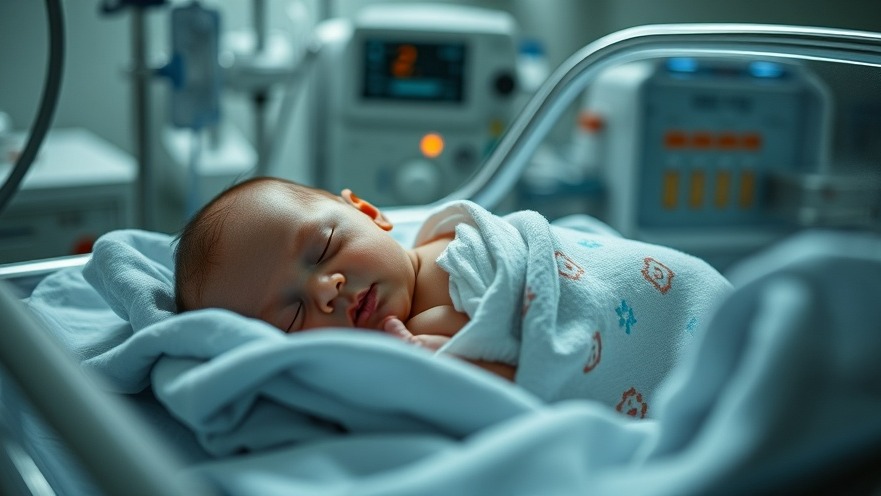
Revolutionizing Neonatal Care: The Wireless Pacifier
In a significant advancement for neonatal intensive care units (NICUs), researchers from the Georgia Institute of Technology have developed a wireless pacifier gadget that can continuously monitor vital electrolyte levels in newborns through saliva analysis. This innovative pacifier aims to minimize the distress of painful blood draws that are a common necessity for checking the health of premature infants.
The Current Challenges in Neonatal Health Monitoring
Currently, monitoring vital signs in infants often requires invasive procedures, notably blood draws to assess electrolyte levels, which can be traumatic for the delicate patients and require skilled medical personnel. According to Hong Yeo, the lead researcher and professor at Georgia Tech, the pain and risk associated with frequent blood draws can lead to undue stress for infants, potentially affecting their long-term health outcomes. The wireless pacifier provides a promising alternative that could transform this ongoing cycle of distress.
The Technology Behind the Wireless Pacifier
The pacifier operates using a miniature design that incorporates a microfluidic channel within the nipple of the pacifier. Saliva is drawn into this channel, allowing flexible, ion-sensing membranes to detect sodium and potassium levels in real time. This non-invasive approach not only alleviates stress on the infants but also simplifies the process for healthcare providers.
Positioning Non-Invasive Monitoring as the Future of Neonatal Care
Non-invasive methods for monitoring vital signs, including heart rate and respiratory rates, have been drawing interest in recent years as a means of enhancing the safety and comfort of infants in NICUs. Various technologies, such as pulse oximetry, and more advanced methods using imaging technologies, have shown promise; however, none have yet achieved the widespread implementation that the wireless pacifier could pave the way for.
Clinical Insights and Future Applications
According to a systematic review on non-invasive monitoring methods for neonates, clinicians are actively seeking alternatives to traditional invasive techniques which pose risks to health and compliance. The wireless pacifier could not only improve monitoring practices in hospitals but also be adapted for home monitoring as infants transition out of the NICU. This adaptability could empower parents and caregivers by providing real-time data on their infant's health outside of the clinical setting.
Addressing Care Challenges in the NICU
For health practitioners, the ability to monitor electrolyte levels non-invasively means a shift towards holistic, patient-centered care practices. This can potentially lead to improved patient outcomes by allowing for more prompt responses to electrolyte imbalances without causing distress or discomfort to fragile newborns.
Conclusion: The Potential for Broader Application
The implications of the wireless pacifier concept extend beyond just monitoring electrolytes; it serves as a foundation for future designs of wearable medical technologies aimed at enhancing pediatric healthcare. As the demand for innovative health solutions grows, it is clear that integrating technology into these challenges can lead to breakthroughs that not only improve clinical efficiencies but also revolutionize the actual patient experience.
For practitioners dedicated to enhancing patient care through innovative solutions, staying informed on such technological advancements is crucial. The development of a wireless pacifier is just one example of how ingenuity can directly affect the trajectory of healthcare innovation in neonatal care.





Write A Comment