


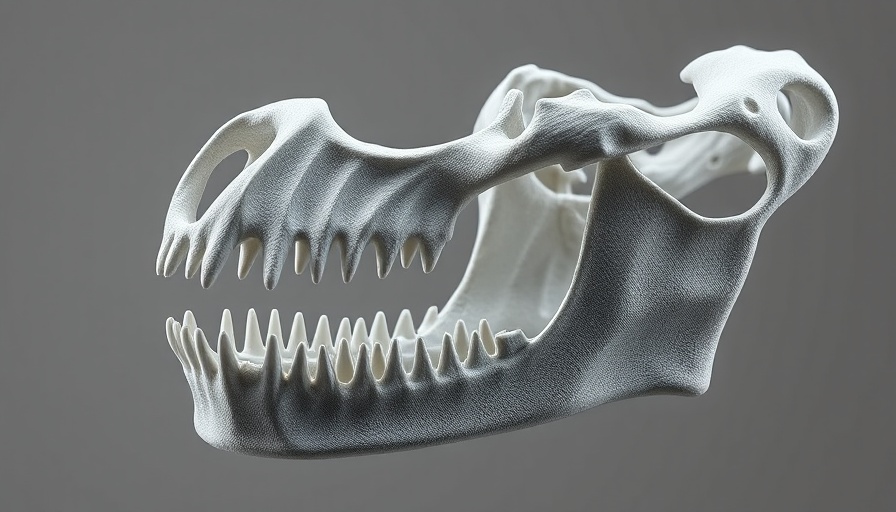
Groundbreaking Advances in Dental Reconstruction
Clinicians at The University of Queensland (UQ) have achieved a pioneering approach to jawbone reconstruction using 3D printed scaffolds. Spearheaded by Professor Saso Ivanovski from the UQ School of Dentistry, this innovative technique has been successfully trialed on a 46-year-old man, offering a promising future for reconstructive surgery.
The custom-designed, biocompatible scaffolds promote new bone growth around them, thus setting a foundation for dental implants that integrate with natural bone structures. Made from polycaprolactone (PCL), these scaffolds are fully resorbable, eliminating the need for additional surgeries required by traditional methods. "This breakthrough heralds a new era in dental reconstruction," Professor Ivanovski explains, highlighting its safe and effective use.
The Power of 3D Printing in Medicine
This innovation not only represents a major step forward in dental technology but also underscores the vast potential of 3D printing in the medical field. Lead biomedical engineer Dr. Reuben Staples emphasizes that the technology allows for personalized construction of bone implants that are cost-effective compared to metallic alternatives. Furthermore, this innovation aligns with Australian regulatory standards, enhancing its practicality for broader application across the healthcare sector.
Future Predictions and Trends
As the UQ team looks to extend their trials in collaboration with clinicians across Australia and Spain, the focus shifts to optimizing design for more widespread accessibility. The expanding scope of this research could potentially redefine reconstructive dental surgery globally. With the continuous advancement of 3D printing capabilities, the prospect of developing more sophisticated solutions in bone and dental repairs becomes increasingly tangible. As this technology evolves, concierge health practitioners should anticipate transformative changes in treatment methodologies that can significantly impact patient care.
Unique Benefits of Knowing This Information
For health practitioners, understanding this cutting-edge technology presents unique opportunities to stay at the forefront of medical advancements. By incorporating 3D printing solutions into their practice, healthcare professionals can offer more tailored, effective treatments that align with modern needs. This knowledge empowers practitioners to make informed decisions and leverage emerging technologies to enhance patient outcomes and satisfaction.





Write A Comment