


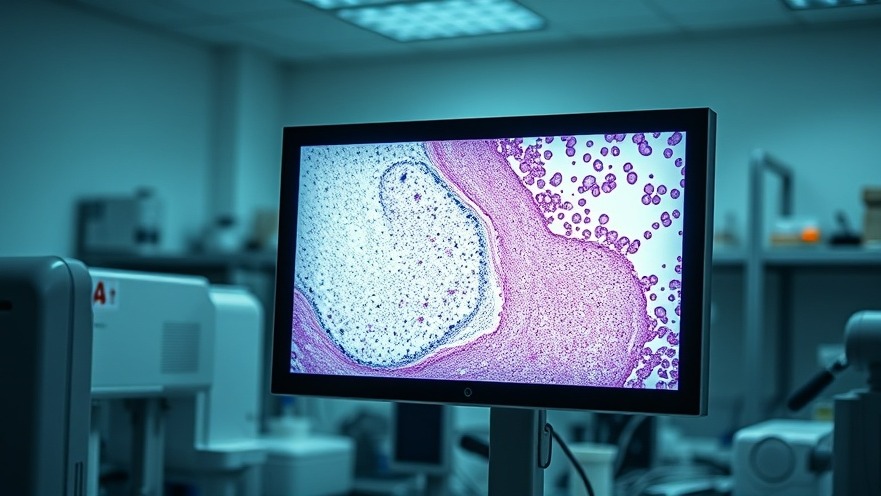
Revolutionizing Histopathology: AI Meets Traditional Microscopy
For centuries, histopathology has been a cornerstone of medical diagnostics, enabling clinicians to make informed decisions based on the microscopic examination of tissues. Today, an innovative method developed by the Blavatnik Institute at Harvard Medical School is set to revolutionize this age-old technique. The NoR-AI pipeline merges traditional microscopy with cutting-edge AI image analysis, addressing historical limitations of microscopy that often distort tissue features and omit crucial lipid and water-soluble material data. Using this advanced methodology, researchers can access a richer tapestry of information about biological tissues, paving the way for enhanced understanding and treatment of various diseases.
How NoR-AI Changes the Game for Tissue Analysis
NoR-AI is a game-changer for researchers and practitioners alike. Traditional methods often require extensive tissue preparation that can obscure critical details necessary for accurate diagnosis. In contrast, NoR-AI requires little to no preprocessing and allows for findings to be generated within 30 minutes—significantly faster than traditional processes that may take several days for results. This rapid analysis not only saves time but also enhances the accuracy of tissue evaluations through high-quality, quantitative imaging, leading to more precise diagnoses and tailored treatment plans.
Detailed Imaging Brings Unforeseen Insights into Disease
The NoR-AI method utilizes a technique called normalized Raman imaging (NoRI), which captures detailed images using stimulated Raman scattering. This approach measures light interactions with tissue, yielding images that are free from common noise that can cloud traditional microscopy outcomes. As researchers apply AI, it allows the system to discern distinctions in microscopic structures that were previously indiscernible. The clarity provided by NoRI helps in understanding the microanatomy of different tissues, revealing new insights, such as how diseases develop and progress at the cellular level.
Potential Impact on Patient Care: Faster, More Accurate Diagnoses
The implications of NoR-AI extend beyond the lab. With its capacity to capture distinct lipid and protein distributions in tissues, the imaging method provides invaluable insights that could lead to breakthroughs in understanding diseases like acute kidney injury. By identifying previously unrecognized features associated with illness, healthcare practitioners equipped with this technology can improve diagnostic accuracy and tailor treatments to individual patient needs more effectively. Achieving such precision in diagnostics could be transformative, particularly for chronic conditions that are notoriously difficult to diagnose early.
Broadening Horizons: Applications in Other Medical Fields
Although initially focused on kidney injuries, the potential applications of NoR-AI are extensive and applicable to various fields of medicine. For instance, researchers can apply this technique in oncology to better visualize tumor microenvironments and identify cancer stages more reliably. In cardiovascular medicine, improved imaging of heart tissues can lead to enhanced understanding of heart diseases, facilitating better management. Neurological conditions also stand to gain, as the method can help visualize brain tissues in fine detail, potentially unlocking new approaches to treatment. With continued development, NoR-AI could broadly impact the understanding of many conditions that currently hamper patient health.
The Future of Medical Imaging: Beyond Histopathology
Imagine the possibilities: with the ability to analyze tissues rapidly and accurately, NoR-AI could redefine medical imaging across various specialties. This technology certainly has the potential to enhance the diagnostic process in oncological, cardiovascular, and neurological diseases among others, fueling research and improving patient outcomes. As health practitioners prepare for this transformative shift, it is crucial to consider how their practices can adapt to integrate such tools effectively.
Conclusion: Taking Action
As healthcare continues to embrace technological innovation, staying informed about advancements like NoR-AI becomes critical for practitioners. Integrating AI-assisted imaging into practice not only prepares you for future trends but could also empower your patient care approach. Engaging with these new developments and considering how this technology might enhance your practice’s capabilities will be vital for remaining competitive and efficiently serving patient needs in an evolving healthcare landscape. With the rollout of such advanced imaging techniques, practitioners who are proactive in incorporating these innovations will likely see substantial benefits in diagnostic capabilities and patient management strategies.






Write A Comment