


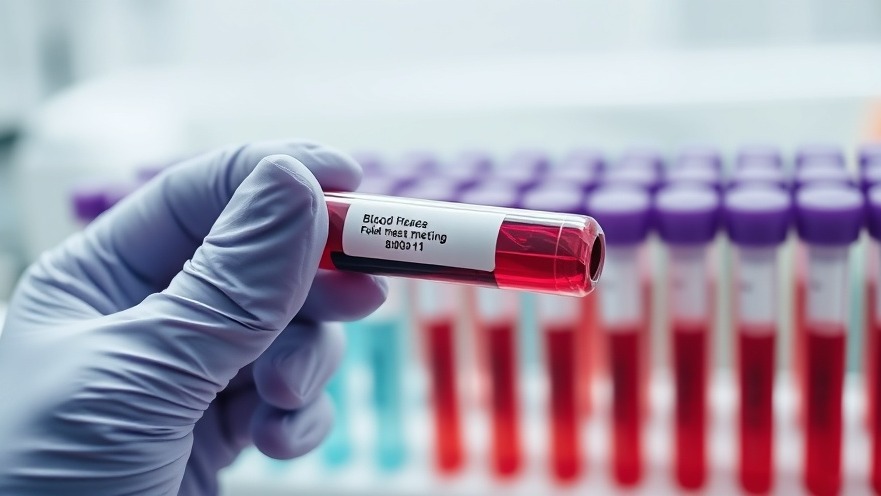
Understanding the Breakthrough: An RNA-Based Blood Test for Parkinson's
Recent advancements in medical science have led to the development of an innovative RNA-based blood test capable of identifying Parkinson's disease (PD) before noticeable symptoms manifest. Conducted by researchers at the Hebrew University of Jerusalem, this groundbreaking study highlights the significance of early diagnosis in neurodegenerative diseases, which has been a challenge for healthcare professionals for decades.
How the Test Works: Decoding the Science Behind Early Detection
This revolutionary test quantifies specific RNA fragments in the blood. By focusing on a repetitive RNA sequence that accumulates in Parkinson's patients while monitoring the decline of mitochondrial RNA over time, the test assesses the ratio between two critical biomarkers. The findings reveal that an increase in PD-specific tRNA fragments (tRFs) coupled with a corresponding decrease in mitochondrial tRFs can signal the onset of Parkinson's disease. This empowers healthcare providers to offer targeted interventions much earlier than current diagnostic methods allow.
The Urgency of Early Detection: A Parallel to Cancer Diagnoses
Drawing a comparison with cancer diagnostics, researchers emphasized the critical nature of identifying such neurodegenerative diseases earlier. Traditionally, the diagnosis of Parkinson's, much like cancer fifty years ago, often occurs too late for effective intervention, leaving patients with few options. The RNA blood test can revolutionize this approach, mirroring advancements in cancer detection that have improved patient outcomes through timely treatment.
Implications for Practice: Transforming Patient Care
For concierge health practitioners focused on delivering premium patient care, understanding and implementing this RNA-based blood test is paramount. As these medical professionals seek to remain at the forefront of technological advancements, the ability to diagnose conditions pre-symptomatically not only enhances patient outcomes but also positions practitioners as leaders in their field. With such tools, healthcare providers can create tailored treatment plans, monitor disease progression more effectively, and initiate preventive measures early.
Future Trends in Diagnostics: What Lies Ahead?
The introduction of RNA-based diagnostics heralds a new era in predictive medicine. As the medical community embraces these technologies, healthcare professionals will witness a shift in how diseases are identified and treated. Keeping a close eye on future research surrounding RNA and its applications could unveil further breakthroughs, potentially extending beyond Parkinson’s disease to other neurodegenerative disorders and chronic illnesses.
Local vs. Global: Broader Conversations in Healthcare Innovations
This breakthrough is not isolated—similar discussions about early detection and treatment strategies for neurodegenerative diseases are taking place globally. Health systems that proactively integrate innovative diagnostics like this RNA test can vastly improve patient outcomes. As concierge practitioners consider the implications of this technology, they are urged to participate in broader dialogues about public health and how such advancements can be implemented on larger scales.
Actionable Insights and Practical Implementation Steps
For healthcare providers eager to adopt this technology, the first step is to stay informed through reliable medical journals and continue their education regarding advancements in diagnostic tools. Collaborating with research institutions and participating in relevant workshops will enhance their understanding and ability to integrate these innovations into practice. Furthermore, practitioners should actively communicate the benefits of early detection with their patients to encourage participatory health management.
Common Misconceptions About Parkinson's Disease Diagnosis
Many individuals mistakenly believe that Parkinson’s disease can only be diagnosed once physical symptoms appear. This misconception underscores the importance of public education and awareness about the availability and effectiveness of new diagnostic technologies like RNA blood tests. By clarifying these misconceptions, health practitioners can foster a more informed public that advocates for early and proactive health screenings.
In conclusion, the advent of RNA-based blood tests represents not just a technological leap but a transformative shift in how Parkinson's disease and potentially other neurodegenerative conditions can be diagnosed. As health practitioners, embracing these advancements will not merely enhance clinical outcomes; it will also contribute to the broader mission of advancing public health. For those keen to stay ahead in the ever-evolving landscape of medical news, it is essential to explore and understand technologies like this RNA scoop and leverage them for better patient care.





Write A Comment