


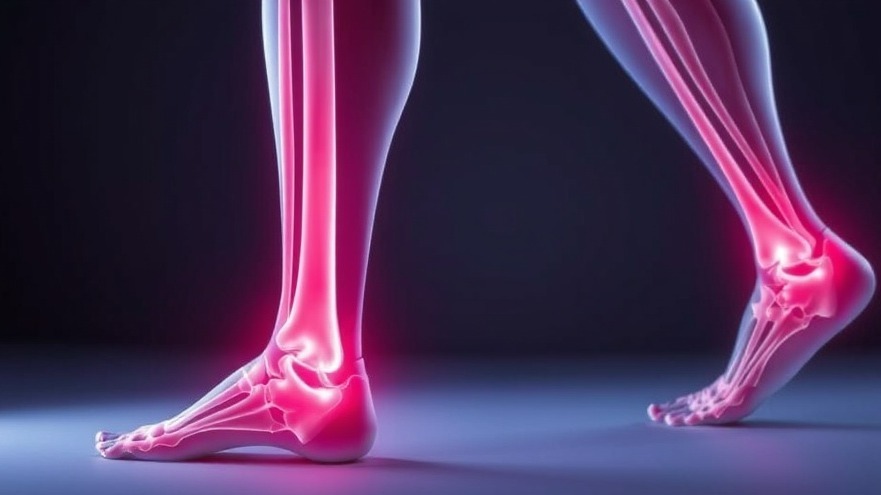
New Technology Revolutionizes Bone Healing Monitoring
A medical research team at Saarland University, led by Professor Bergita Ganse, has developed a groundbreaking approach to monitoring the healing of bone fractures. Instead of relying on traditional X-ray images and CT scans, which expose patients to harmful radiation, this innovative method employs near-infrared light. This shift signifies a major advancement in how we can understand and track bone regeneration without the associated risks of higher-energy radiation.
How It Works: Near-Infrared Light and Blood Flow Monitoring
The technology utilizes devices that assess blood supply and oxygen levels at the fracture site, making it a quick and effective solution for clinicians. Imagine a small device, much like a portable gadget, that can be placed on the skin over a fracture. Within seconds, it provides valuable insights on healing status. This newfound ability enables clinicians to rapidly assess healing without waiting for traditional imaging results, which can delay treatment adjustments.
The Advantages Over Traditional Imaging Techniques
Previous methods of monitoring bone fractures have relied heavily on imaging that necessitates high-energy radiation exposure. The main drawbacks of these methods include not only the risk associated with repeated radiation but also their delayed sensitivity. X-rays detect only increased mineralization and density, which may not appear until later stages of healing. Ganse’s team notably alleviates these challenges by emphasizing immediate assessment capability using blood flow and oxygen saturation technology.
Implementation in Clinical Practice: What Healthcare Practitioners Should Know
As health practitioners aiming to elevate the quality of patient care, integrating this new monitoring technique into practice could significantly enhance patient outcomes. Imagine being able to monitor a patient’s fracture healing process closely without exposing them to radiation. This innovation represents a paradigm shift in orthopedic and rehabilitation strategies. Its non-invasive nature aligns well with the growing emphasis on patient safety and minimizing unnecessary interventions.
Future Focus: Potential of Smart Implants and Beyond
In tandem with tracking bone healing, the larger 'Smart Implants' project at Saarland University envisions these technologies not only enhancing standard post-op follow-up but potentially optimizing the design and functionality of surgical implants themselves. The application of smart materials that can provide real-time feedback on biological conditions opens new doors in surgery and rehabilitation.
Patient Outcomes and Satisfaction: The Emotional Aspect
Our patients deserve comprehensive and considerate care—this is a fact many practitioners understand deeply. Knowing that their healing can be monitored accurately without the psychological and physical burdens of radiation will likely yield higher patient satisfaction and trust. This emotional pillar cannot be overlooked when implementing new technologies; it speaks volumes about the care culture in any healthcare setting.
Conclusion
As healthcare practitioners endeavor to improve their practices and deliver the best possible care, adopting non-invasive technologies like this can serve as a multifaceted tool. Not only does it promise enhanced monitoring capabilities, but it also aligns with the core tenet of patient-centered care by minimizing risks associated with traditional methods. Seize this opportunity to stay ahead in the rapidly evolving field of healthcare technology.





Write A Comment