


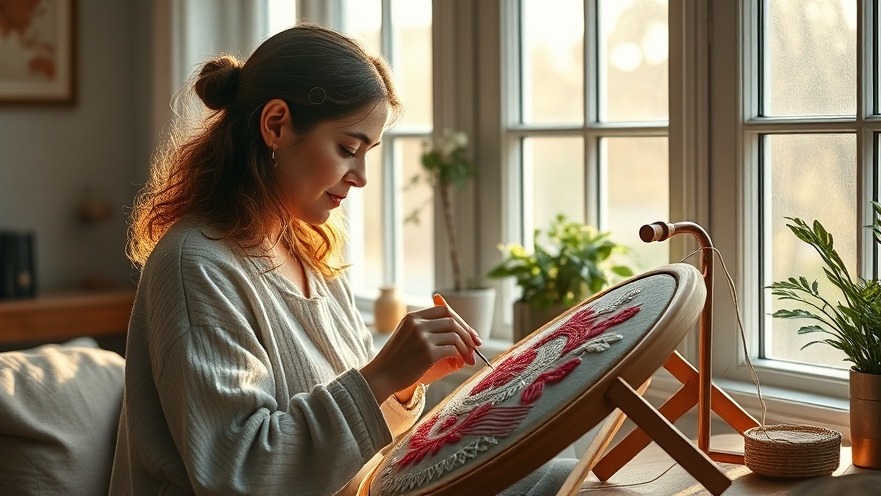
Why Hands-On Hobbies Like Punch Needle Embroidery Help Alleviate Stress
For many, traditional methods like meditation can often feel unattainable. With buzzing notifications and swirling thoughts about work and life, finding a moment of calm can seem more daunting than it should. This is where hands-on hobbies, such as punch needle embroidery, provide a practical alternative. Engaging in repetitive, low-stakes activities allows you to channel your focus into something tangible, redirecting mental energy away from stress and anxiety.
How Busy Hands Lead to a Calm Mind
Repetition in craft activities works like a meditation practice. When you immerse in an aesthetically rewarding task, your mind finds a rhythm, much like the beat of music. Punch needle embroidery, in particular, is a forgiving craft; you wield a hollow needle that easily guides yarn through fabric. Mistakes can be effortlessly corrected, lowering the anxiety often tied to trying something new. This accessibility makes it an excellent choice for anyone looking to dive into crafting without the fear of failure, allowing you to witness progress quickly and encouraging you to continue.
Research Insights: Crafting’s Impact on Mental Health
While no specific clinical trial on punch needle embroidery exists, larger studies on crafting reveal uplifting trends. A notable 2024 survey from Anglia Ruskin University surveyed nearly 7,200 people, finding that those who engaged in creative tasks experienced increased happiness and life satisfaction. Interestingly, the positive impact on overall well-being had a surprisingly comparable effect to being employed. Nevertheless, the modesty of a 2% improvement suggests that while crafting uplifts mood, it might not solely be the creative process but rather reflects a deeper correlation between being happy and engaging in artistic activities.
Why Engaging in Hobbies Is More Critical Now Than Ever
The perspective on mental wellness is shifting, especially as surveys, like the American Psychological Association's 2025 Stress in America report, highlight rising feelings of isolation and a yearning for emotional support. In fact, 69% of respondents felt they needed more emotional support than what they received. Now more than ever, engaging in solitary hobbies like punch needle could serve as a foundational coping strategy during moments of heightened stress.
The Community Aspect of Crafting
However, the benefits of crafting don’t have to be limited to solo projects. Collaboration can enhance the emotional benefits of crafting. A 2025 study of university students in China uncovered that group crafting could mediate feelings of stress and depression, suggesting that social crafting circles offer dual benefits: creative expression and social interaction. Hosting a stitching circle in your practice could transform a straightforward hobby into a community-building initiative.
Getting Started: A Simple 20-Minute Punch Needle Routine
Breaking down the barriers to entry is crucial for new hobbies. You don’t need a great deal of time to get started. Set aside just 20 minutes to explore punch needle embroidery. Begin by choosing a simple pattern from a purchased kit—these kits typically come pre-printed with designs, simplifying the initial steps. Gather your materials, set a timer, and then dive in. Throughout this brief session, let your fingers guide the needle, and notice how your mind begins to quiet with repetitive movement.
Conclusion: Embedding Crafting into Patient Care
In a world increasingly acknowledging the connection between overall health and mental wellness, introducing hands-on hobbies like punch needle embroidery into your practice could enhance patient satisfaction. Encourage your patients to find calm in their busy lives through engaging, creative activities. As a concierge medical practice owner, showcasing this aspect of holistic health aids in building lasting relationships with your patients and secures your position as a leader in comprehensive patient care.






Write A Comment