


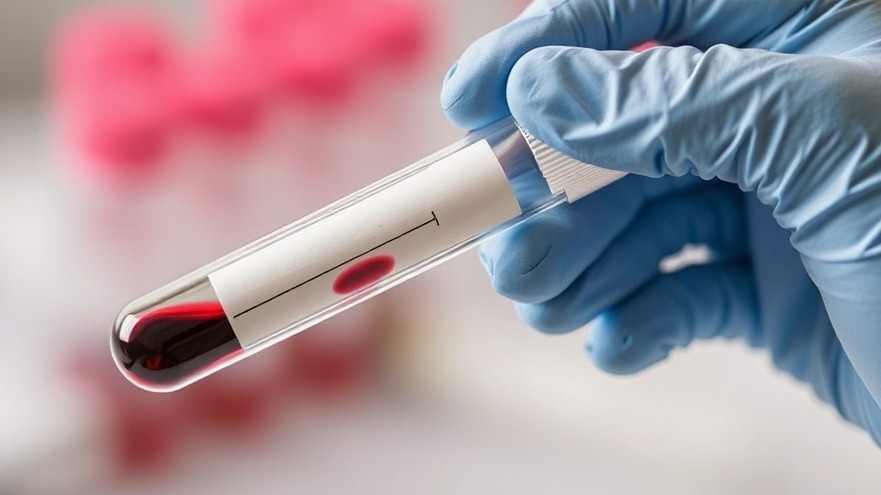
Revolutionizing Alzheimer's Diagnostics Through New Blood Tests
In a significant breakthrough, researchers at University Medicine Halle have developed an innovative two-step method to enhance the reliability of blood tests for Alzheimer's disease. Aging populations and the increasing incidence of Alzheimer’s necessitate accurate diagnostic tools, and this new development has the potential to improve early diagnosis, thereby facilitating timely intervention with emerging therapies that can significantly change prognosis and quality of life for affected individuals.
The Challenge with Current Biomarkers
Current commercial blood tests predominantly measure the protein biomarker p-tau217, which is known to rise in the early stages of Alzheimer's. However, its levels can also increase in other neurological diseases such as amyotrophic lateral sclerosis (ALS). This ambiguity can lead to false positives, resulting in unnecessary anxiety for patients and incorrect treatment plans. In a previous observation, the University Medicine Halle team showed that elevated p-tau217 could not solely be relied upon as an indicator of Alzheimer's, underscoring the need for a refined approach. Misdiagnosis not only complicates treatment but can also have psychological impacts on patients and their families.
How the New Method Works
The new method introduced by the researchers incorporates an additional antibody step. Initially, a specific antibody isolates 'brain-derived tau' from the blood sample before measuring its levels. This two-step examination not only aims to increase diagnostic accuracy but also seeks to reduce misdiagnosis from overlapping symptoms with other conditions. Traditional techniques had limitations in distinguishing between various tau protein forms, which further complicated the diagnostic landscape. The incorporation of this novel technique allows a more precise analysis, ensuring that the presence of tau protein linked directly to Alzheimer's is detected more reliably.
Research Findings and Implications for Practice
A study involving 315 participants, including individuals diagnosed with Alzheimer's, ALS, and a control group, demonstrated the effectiveness of this enhanced method. While conventional tests indicated elevated p-tau217 in both Alzheimer’s and ALS patients, the revised approach revealed that only Alzheimer’s patients exhibited consistently high p-tau levels. This significant differentiation is crucial for healthcare professionals as it allows for more confident diagnoses, thereby aligning treatment approaches effectively. The potential for reducing diagnostic errors will not only lead to more appropriate patient management but also help to streamline healthcare resources, enabling providers to focus on targeted interventions for those who truly need them.
Future Directions and Importance for Patient Care
Given the promising results, the implications extend beyond clinical accuracy. Early and accurate diagnosis plays a vital role in providing patients access to recently approved antibody treatments for Alzheimer's. As treatments are most effective in the early stages of the disease, reliable diagnostic tests are essential for facilitating this timely intervention. Moreover, as Alzheimer’s disease remains a pressing issue for aging populations, this advancement in blood testing could significantly influence practices aimed at promoting patient wellness and health management. With the surge in the aging demographic, the necessity for improved diagnostic criteria cannot be overstated; it is paramount to ensure patients receive the right care at the right time.
Actionable Insights for Health Practitioners
For concierge health providers, staying updated with advancements like these is essential. Understanding the nuances of this new testing method can lead to improved patient outcomes. Practitioners are encouraged to incorporate this knowledge into their patient consultations and consider how it will influence treatment options. Early detection and precise diagnostic tools not only impact individual patient care but also serve as a standard for improving care protocols in the field of neurology. This improvement can also foster better communication with patients regarding their conditions, minimizing uncertainty.
As the focus on Alzheimer's diagnostics continues to grow, practitioners should remain proactive in adapting their methodologies to include such innovative solutions. Keeping abreast of new technologies not only bolsters their practice but ultimately enhances patient relationships and care efficacy. By integrating this advanced blood testing method into their diagnostic arsenal, health practitioners can play a crucial role in mitigating the impact of Alzheimer's on patients and their families, paving the way for more effective treatment landscapes in the future.







Write A Comment